
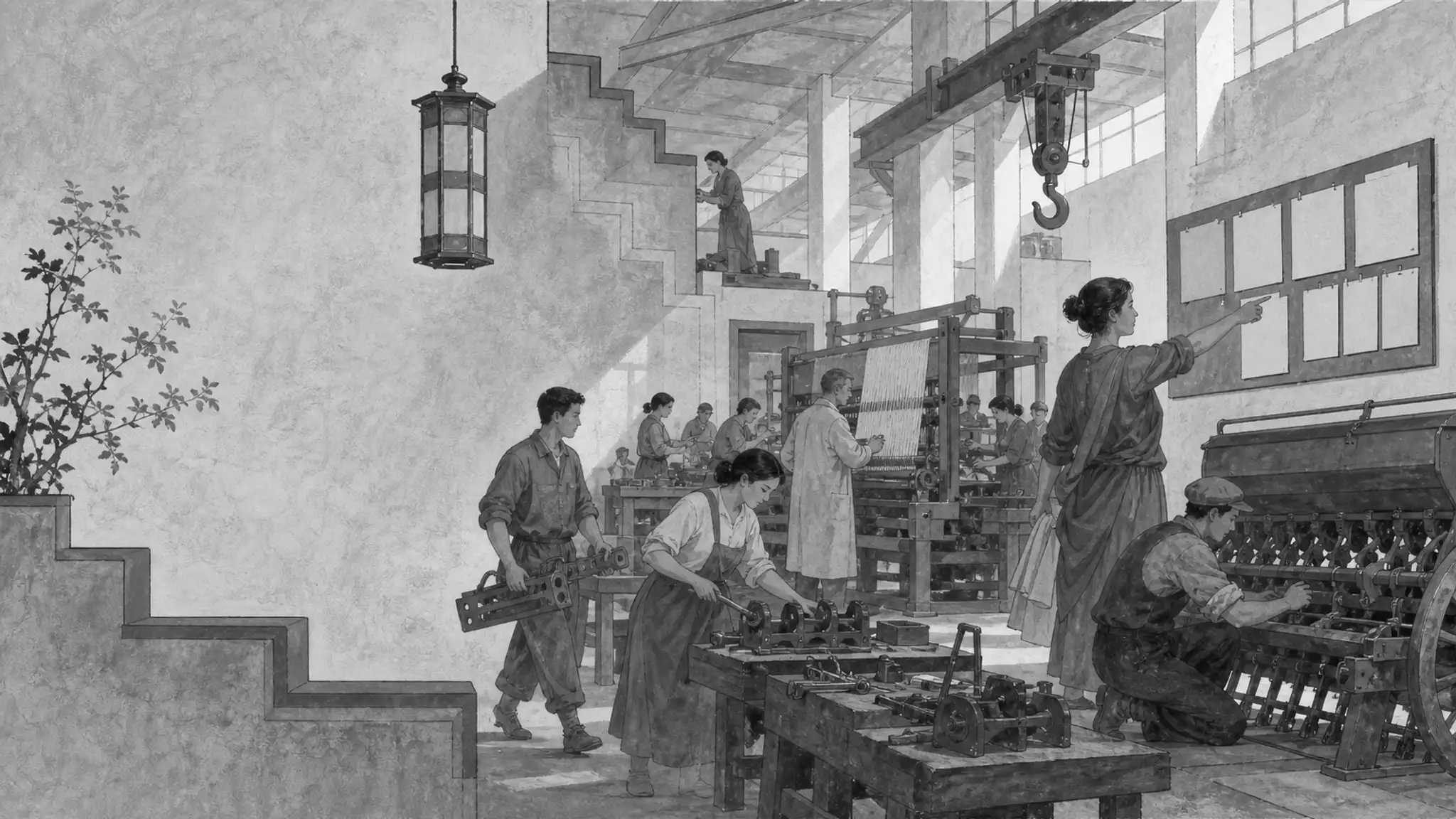
Economy
Households and Work
The economy starts from household stability: useful work, predictable costs, fair access, and enough security for people to plan their lives.
Economy
Household stability
This is the everyday economy. Can people afford life, build skills, do useful work, and avoid being crushed by one bad month?
A plan can be judged the way a household judges a month: did people eat, work, learn, and end the month able to face the next one? That is what the plan measures first.
Household stability
Valoria treats housing, education, healthcare, energy, and transport as stability systems before it treats them as markets.
A household should not need perfect luck to stay functional.
The five stability systems
- Housing held as long-term stock, not speculative asset
- Education from early childhood through retraining
- Healthcare reached without financial terror
- Energy priced for predictability, not extraction
- Transport that keeps work, care, and community within reach
Work and skill
Work matters when it supports households, useful production, or the services people rely on.
Education and retraining should help people move into better roles instead of leaving them stranded when work changes.
Measured prosperity
Prosperity is measured by stable lives and what society can build, not only by growth numbers.
Growth that strips its own future does not count.
GO DEEPER
Longer reads, and related texts.