
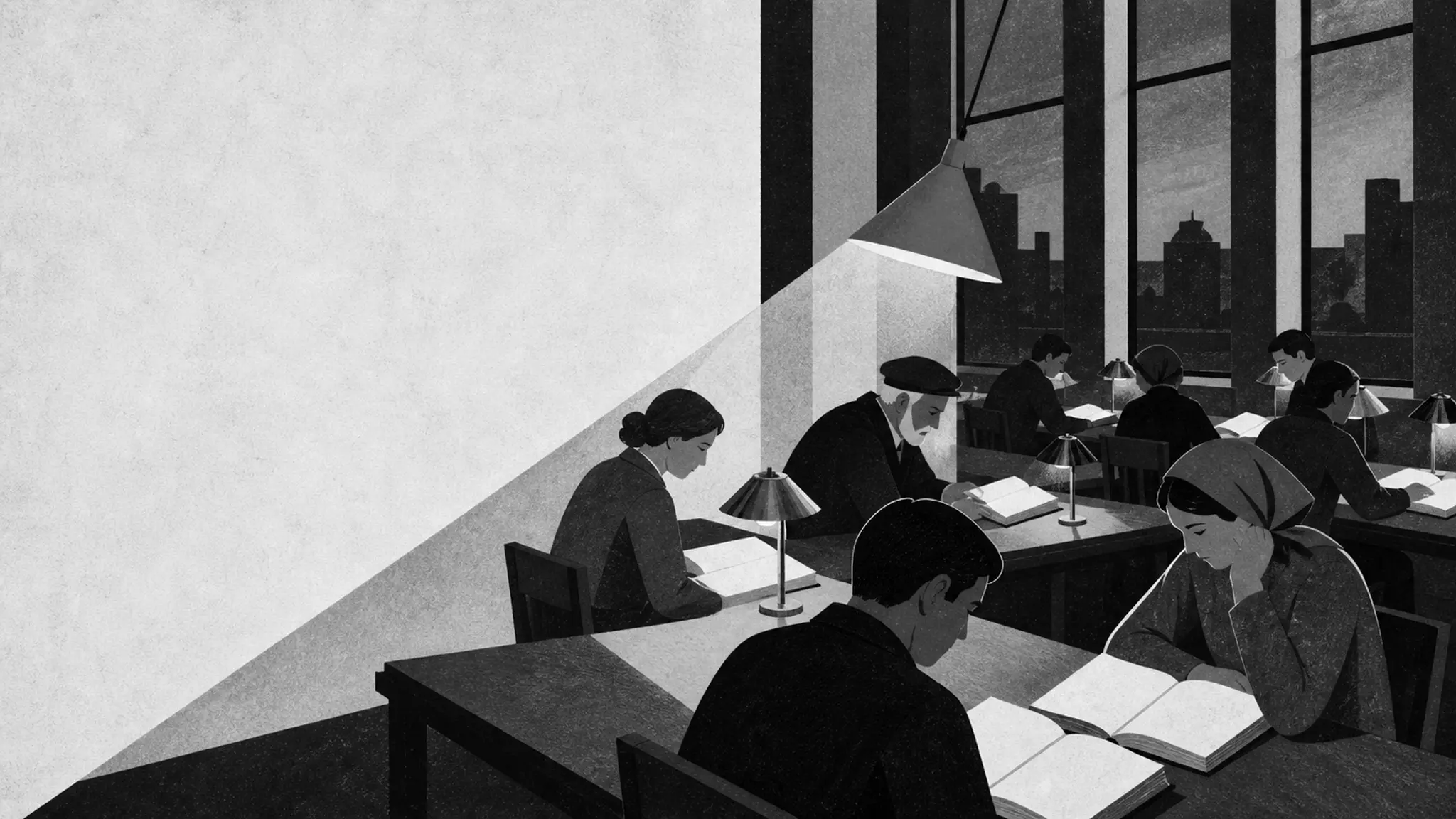
Life
A public system is only credible if ordinary life works.
Culture, education, households, work, youth, and civic adulthood. This is where institutional claims meet the texture of a normal week.
Valoria commission IX
Life
People need room to build a life and enough public reliability to plan one.
Whether Valoria supports private meaning, real choices, and the unremarkable routines that make a society worth preserving.
A theory of government has to account for school, work, family, media, old age, setbacks, and the ability to question institutions.
Civic life has public duties. Private life does not become a state project. Formal terms appear only where they clarify an institution.
Life
The systems people meet in a normal life.
- Culture and Everyday LifeHow ordinary life, private meaning, public reliability, and civic culture fit inside Politeian socialism.
- Common MisunderstandingsPlain answers to concerns about authority, markets, religion, privacy, and everyday life.
- EducationEducation as a lifelong public good: routes, mobility, assessment, and civic understanding.
- Youth and MediaDevelopment, media literacy, attention, safety, and civic adulthood.
Continuity
What keeps ordinary life standing under stress.
- ContinuityLanding page for civil defense, security boundaries, and simulation.
- Civil DefenseEmergency readiness, repair, evacuation, mutual aid, and keeping essential services running under stress.
- SecurityHigh-level security safeguards: protective capacity, deterrence, a counter-offense-only posture, and constitutional control.
- SimulationHow the model-state is stress-tested against failure, shocks, misinformation, and institutional strain.