Life
Education
Education is a lifelong public good: literacy, judgment, skill, civic understanding, and the ability to adapt when life changes.
Life
What education is for
Education is more than school. It gives people the tools to live, work, question institutions, and change direction when life changes.
A civic education system can become indoctrination if it is careless. Valoria’s education model needs pluralism, evidence, and challenge built in.
Core purpose
Education gives people the knowledge and skills they need to live freely, take part in public life, and correct mistakes.
The system values practical skills, civic knowledge, scientific reasoning, history, communication, and the arts.
Public access
Access is a public responsibility, not charity.
A person’s future should not depend entirely on family wealth, location, or an early academic decision.
Civic literacy
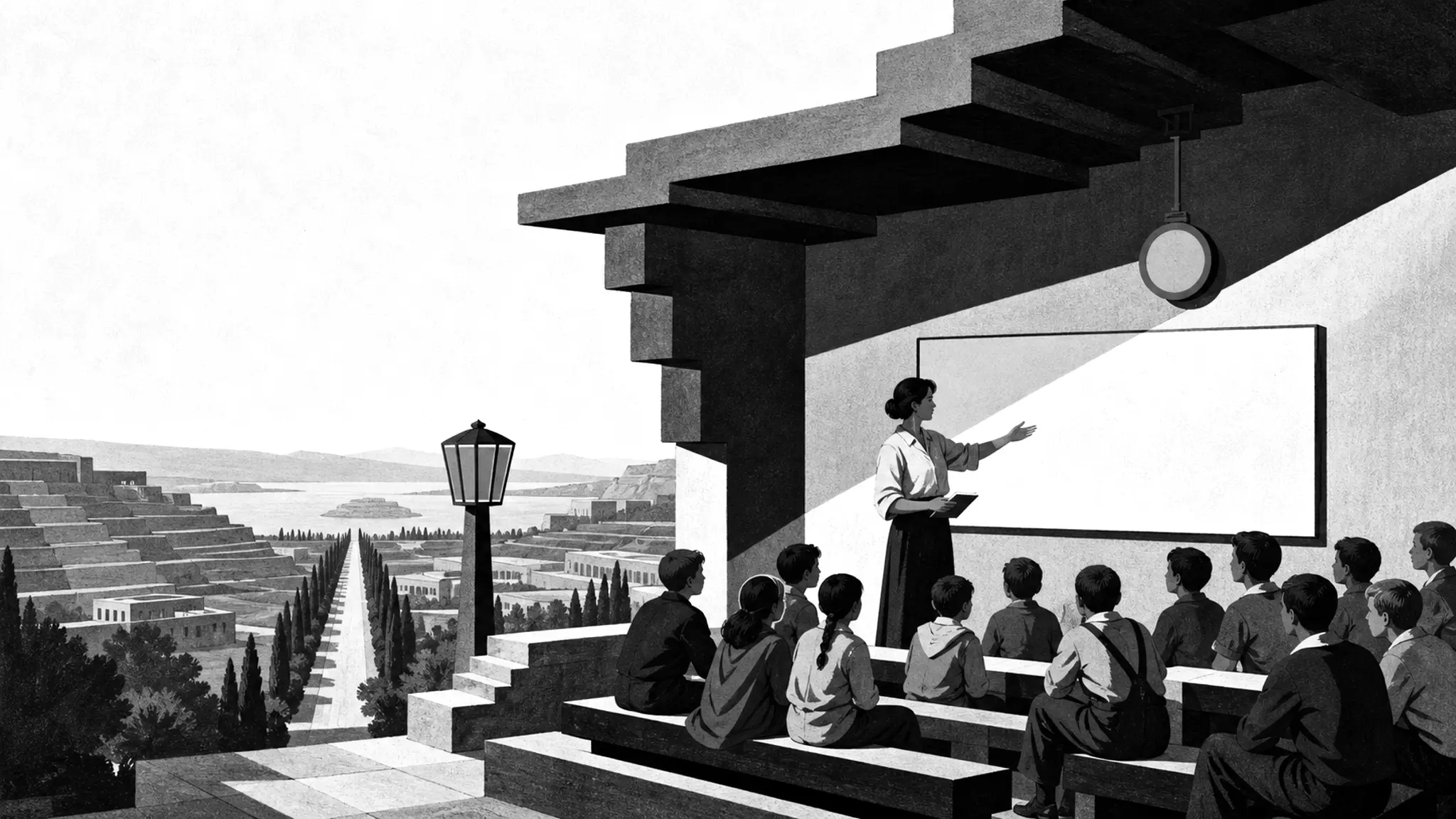
Students learn how institutions work, how to challenge them, and how public decisions should be justified.
The aim is informed participation and the ability to correct mistakes, not obedience.
Multiple routes
Academic, technical, apprenticeship, research, artistic, and public-service paths are treated as serious routes.
No pathway should become a disguised class label.
Mobility and retraining
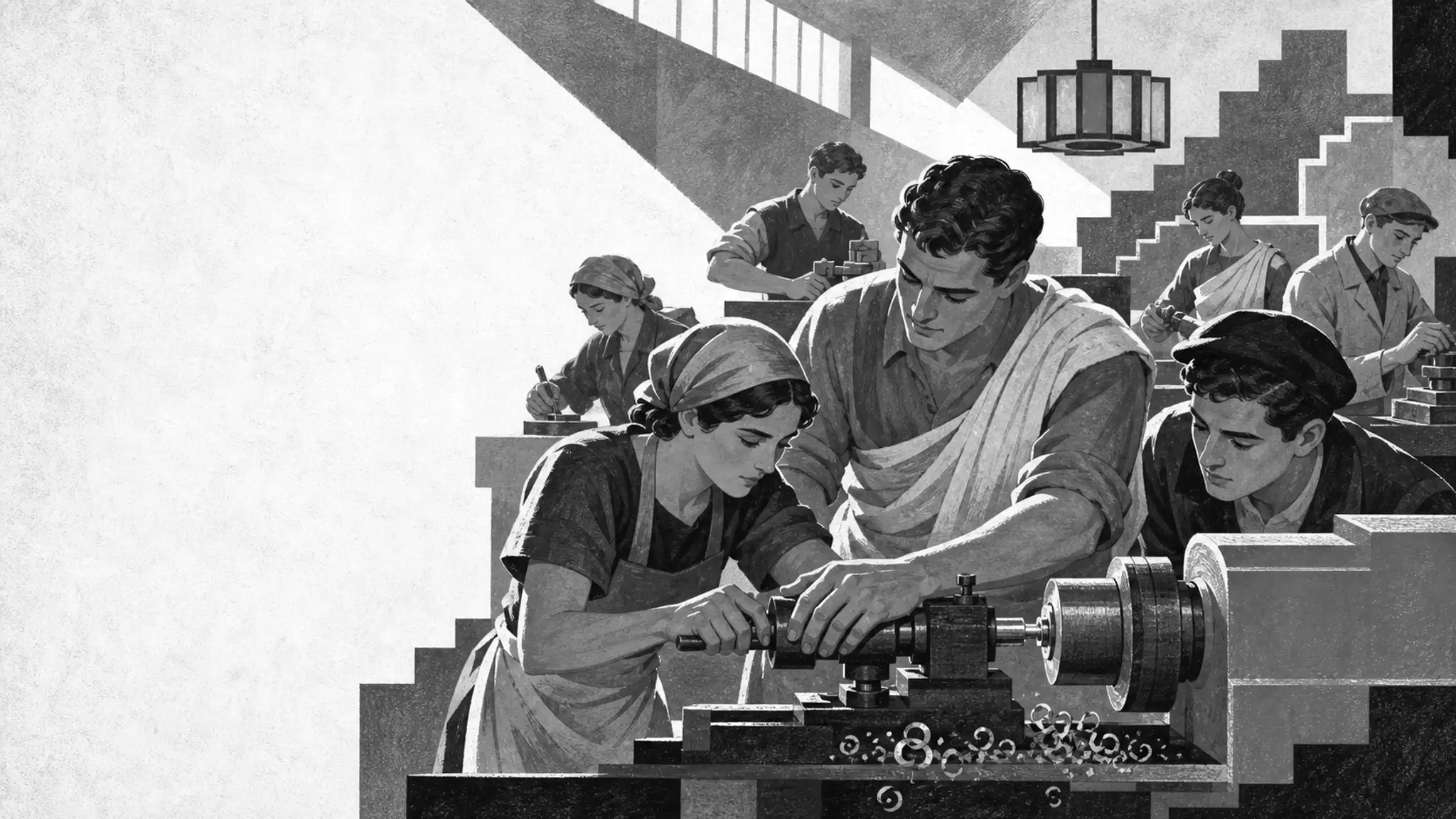
People need ways to change direction as interests, skills, and life conditions change.
Retraining is part of economic continuity, especially when technology or ecological transition changes work. Valoria treats adaptation as a public responsibility rather than a private emergency.
What Gets Measured
Assessment looks at literacy, numeracy, reasoning, craft, collaboration, civic understanding, and practical skill.
A number can reveal a problem. It should not become the whole definition of a person or institution.
Institutional learning
Schools use outcomes to improve teaching and pathways, not only to rank students. When patterns show failure, the institution must change rather than blaming students alone.
Assessment must leave room for late bloomers, uneven development, disability, family stress, and changing goals. A humane system measures seriously without becoming mechanical.
GO DEEPER
Longer reads, and related texts.
- Longer readingEducation Without TrackingHow multiple pathways can create mobility instead of locking young people into early labels.
- Longer readingAssessment Without TheaterHow measurement can improve learning without becoming the purpose of education.
- LifeYouth and MediaDevelopment, media literacy, attention, safety, and civic adulthood.
- EconomyHouseholds and WorkHow the economy supports household stability, useful work, and skill development.
- LifeCommon MisunderstandingsPlain answers to concerns about authority, markets, religion, privacy, and everyday life.