
Life
Education Pathways
Education pathways connect academic, technical, civic, creative, and professional development without treating one route as the only dignified life.
The lived test
What this should feel like in ordinary life.
Daily life is the test the doctrine cannot pass on paper. These pages follow it into schools, workplaces, homes, and public services.
Plain English
People should have more than one serious path into adulthood and useful work.
Common Concern
Pathways become tracking when they are rigid. The design requires mobility between paths and second chances after a wrong turn.
Multiple Routes
Academic, technical, apprenticeship, research, artistic, and public-service paths are treated as serious routes.
No pathway should become a disguised class label.
Mobility
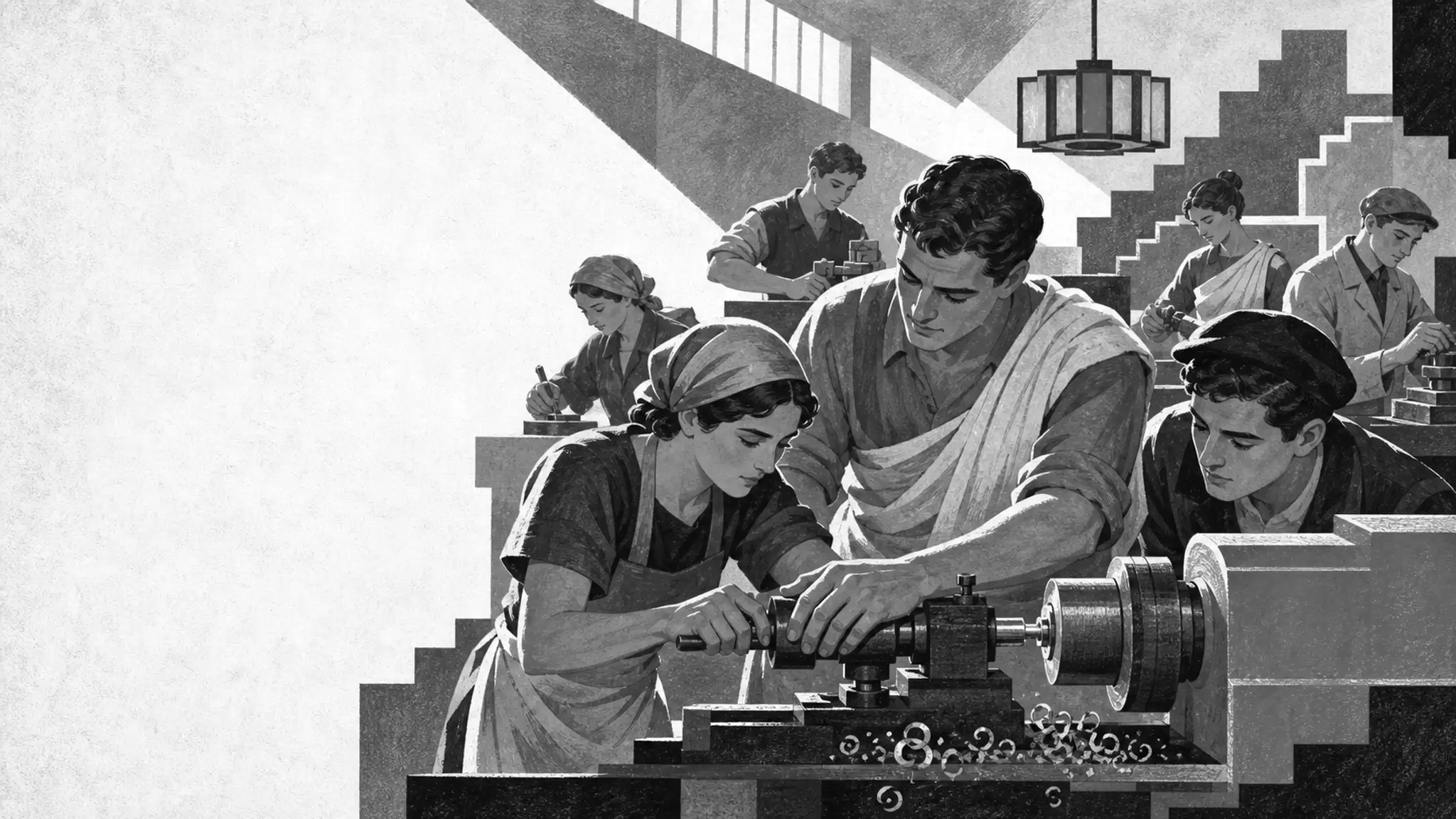
People need ways to change direction as interests, skills, and life conditions change.
A strong education system builds bridges instead of trapping people in early decisions.
Adult Retraining
Retraining is part of economic continuity, especially when technology or ecological transition changes work.
The model treats adaptation as a public responsibility rather than a private emergency.
Go deeper
Longer reading and the adjacent systems this one leans on.
- Longer readingEducation Without TrackingHow multiple pathways can create mobility instead of locking young people into early labels.
- LifeEducationEducation as a lifelong public good: knowledge, skill, civic understanding, and human development.
- LifeAssessment and OutcomesHow learning and institutions are evaluated without reducing education to test pressure.
- EconomyHouseholds and WorkHow the economy supports household stability, useful work, and skill development.